
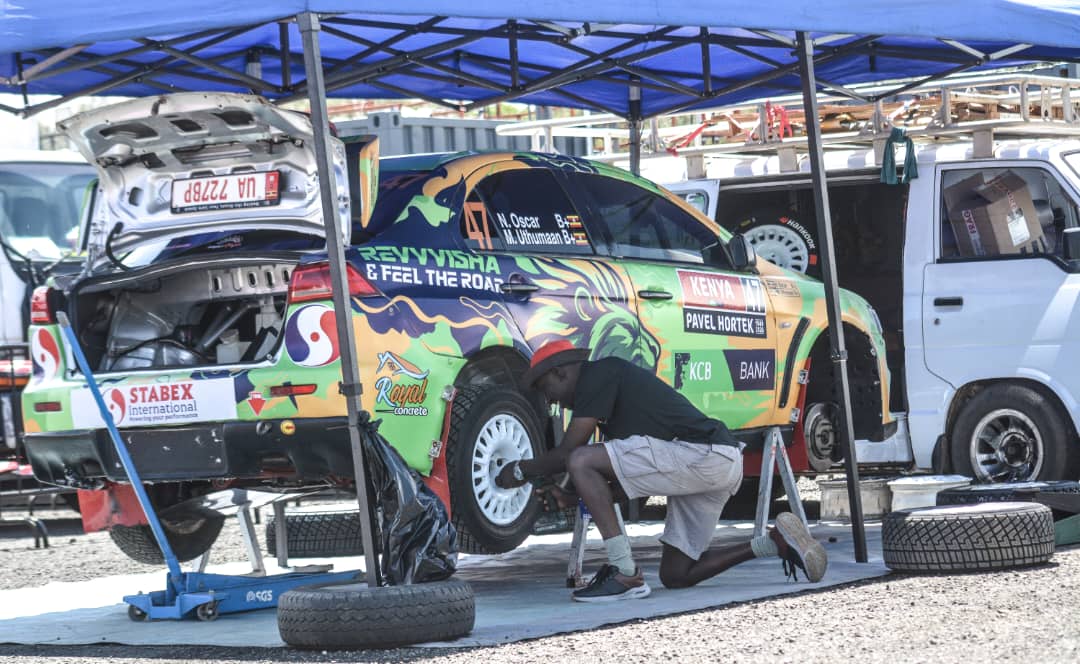
Oscar Ntambi and co-driver Muhamadi Uthumaan at the Naivasha Service Park (Wildlife Research Training Institute) in Nakuru County. Driving the KCB-sponsored Mitsubishi Lancer Evolution X, the Ugandan duo is set to make history as they tackle the grueling WRC Safari Rally stages in pursuit of the ARC2 category title 2026

The World Rally Championship Safari Rally, widely considered one of the most difficult rallies on the world calendar, puts drivers to the test with its harsh gravel sections, deep ruts, dust, volcanic rock, and erratic weather. As the rally takes off today, all eyes are on a historic entry that marks a new chapter for East African motorsport.
The Mitsubishi Lancer Evolution of Ugandan sensation Oscar Ntambi is making its historic entry for his WRC Safari Rally debut. Ntambi is a Ugandan rally driver and motorsport enthusiast known for competing in regional rally events, especially in the African rally scene. He is recognized for his passion for rallying, strong driving skills, and commitment to representing Uganda for the first time in the WRC Safari Rally Kenya.
Driving high-performance rally machines such as the Mitsubishi Lancer Evolution, Ntambi has built a reputation for being determined, hardworking, and competitive on tough rally stages. He is also appreciated by fans for his connection with the rally community and his efforts to promote motorsport in Uganda. As a passionate driver who competes in regional and now international rallies, the “King of 360” may just find his new throne in the world of WRC.
The Machine and the Mission
Ntambi is a name synonymous with grit and flair in the African rally scene. Known for his showmanship and sharp driving skills, he has transitioned from regional dominance to the ultimate test of endurance. Seeing the mechanics work on his machine—a car built to conquer the brutal “fesh-fesh” and rocky tracks—at the service park was a reminder that at the Safari, resilience is the only currency that matters.
The Service Park, Naivasha
The service park is the beating heart of the WRC, serving as the only place where teams can perform major repairs and adjustments. These hubs act as a mobile “pit lane” where mechanics race against a strict 15, 30, or 45-minute clock to keep the cars rally-ready. Beyond the frantic mechanical work, it serves as the primary fan zone in Naivasha where spectators can get incredibly close to the drivers and witness the sheer precision of world-class engineering in real-time.
It is the setting for a true mechanical drama. From suspension scares to the grueling heat of the stages, the service park is where the rally is won or lost as the action unfolds across the Great Rift Valley.